

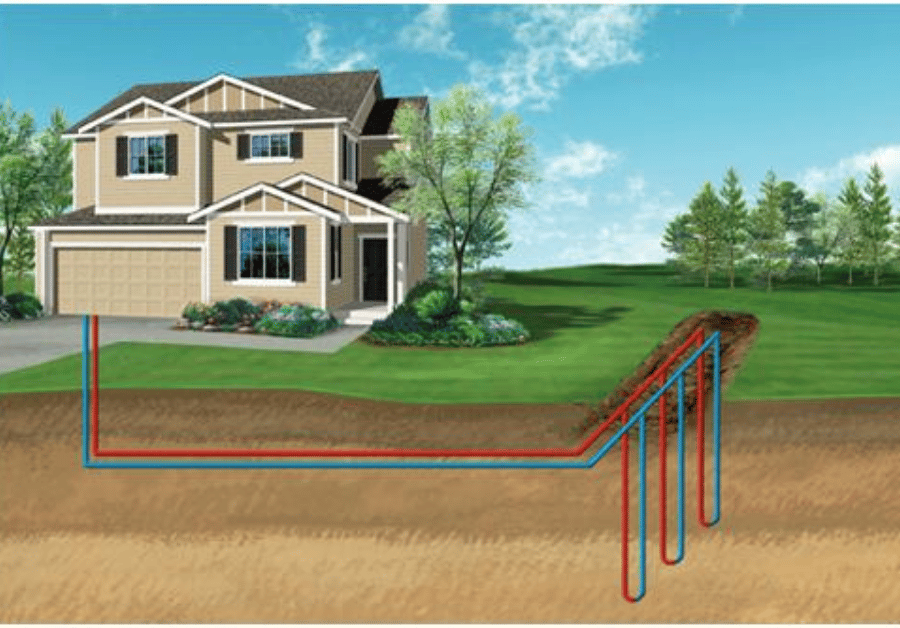
What is a Geothermal Heat Pump System?
A geothermal heat pump (GHP) system, also known as a ground-source heat pump, is an energy-efficient technology that harnesses the relatively constant temperature of the earth to heat and cool buildings. Unlike traditional heating and cooling systems that rely on the fluctuating temperature of the air, geothermal systems tap into the stable thermal energy stored in the ground, making them incredibly efficient and environmentally friendly.
How Does a Geothermal Heat Pump System Work?
The Basic Principle
The earth, just a few feet below the surface, maintains a nearly constant temperature throughout the year, typically ranging from 45°F to 75°F (7°C to 24°C), depending on the location. A geothermal heat pump system capitalizes on this stable temperature by transferring heat between the building and the ground.
The system consists of three main components:
- Ground Loop: A series of pipes buried underground, either horizontally or vertically, depending on the available space and geological conditions.
- Heat Pump: The core of the system that moves heat between the building and the ground loop.
- Distribution System: The system within the building that distributes the heated or cooled air, usually through ductwork or radiant floor heating.
The Heating Process
During the winter, the ground loop absorbs heat from the earth. This heat is then transferred to the heat pump, where a refrigerant circulates through a series of coils. As the refrigerant absorbs the ground’s heat, it changes from a liquid to a gas. The heat pump compresses this gas, raising its temperature even further. The hot refrigerant gas then transfers its heat to the distribution system, which circulates warm air or water throughout the building. After transferring its heat, the refrigerant cools down, returns to a liquid state, and is sent back into the ground loop to absorb more heat, continuing the cycle.
The Cooling Process
In the summer, the process is reversed. The heat pump extracts heat from the building and transfers it to the ground loop, where it is dissipated into the cooler earth. This process cools the refrigerant, which then circulates through the system to provide cool air or chilled water inside the building. Essentially, the ground acts as a heat sink, absorbing the unwanted heat from the building and maintaining a comfortable indoor environment.
Types of Geothermal Heat Pump Systems
There are several types of geothermal heat pump systems, each suited to different land and climate conditions.
1. Closed-Loop Systems
Closed-loop systems are the most common type of geothermal heat pump system. They can be installed either horizontally, vertically, or in a pond/lake.
- Horizontal Loops: These are typically installed in shallow trenches that are several feet below the surface. Horizontal loops are ideal for properties with enough land space and are often the most cost-effective option for residential installations.
- Vertical Loops: Vertical loops are used when land space is limited. Holes are drilled several hundred feet into the ground, where the loops are inserted. Vertical systems are more expensive to install due to the drilling process but are often used for commercial buildings or urban areas where space is at a premium.
- Pond/Lake Loops: If a body of water is available, a pond or lake loop can be used. The loop is placed at the bottom of the water body, where the water’s stable temperature helps regulate the system. This option is less expensive than horizontal or vertical systems but requires a suitable water source.
2. Open-Loop Systems
Open-loop systems use groundwater from a well or a surface water source. The water is drawn directly from the source, passes through the heat pump system, and is then discharged back into the ground or the water source. Open-loop systems are highly efficient and cost-effective but require access to a significant and sustainable water source.
3. Hybrid Systems
Hybrid systems combine geothermal loops with other heating or cooling systems, such as air-source heat pumps. These systems are designed to optimize efficiency by using the most cost-effective energy source available, depending on the time of year or specific weather conditions.
Advantages of Geothermal Heat Pump Systems
1. Energy Efficiency
Geothermal heat pump systems are among the most energy-efficient heating and cooling systems available. They can reduce energy consumption by 30% to 60% compared to traditional HVAC systems. The primary reason for this efficiency is the use of the earth’s stable temperature, which requires less energy to achieve the desired indoor climate.
2. Environmental Benefits
Because geothermal systems rely on renewable energy from the earth, they produce significantly fewer greenhouse gas emissions than fossil fuel-based systems. Additionally, they help reduce reliance on non-renewable energy sources, contributing to a decrease in overall carbon footprints.
3. Cost Savings
Although the initial installation cost of a geothermal heat pump system can be higher than that of conventional systems, the long-term savings on energy bills often offset this. Many homeowners and businesses see a return on investment within 5 to 10 years. Moreover, geothermal systems typically have lower maintenance costs and longer lifespans, often lasting 20 to 25 years for the heat pump and over 50 years for the ground loop.
4. Consistent Comfort
Geothermal systems provide consistent indoor temperatures and humidity levels, enhancing comfort throughout the year. Unlike traditional air-source heat pumps, geothermal systems do not struggle with extreme outdoor temperatures, maintaining efficiency and effectiveness regardless of the season.
5. Quiet Operation
Geothermal heat pumps operate quietly because they do not require outdoor units like traditional air conditioners or heat pumps. The absence of noisy fans or compressors outside makes them an ideal choice for maintaining a peaceful environment.
Read also; Geothermal Energy Advantages And Disadvantages
Challenges and Considerations
1. Installation Costs
The most significant barrier to adopting geothermal heat pump systems is the initial installation cost. Drilling, trenching, and laying the ground loops can be expensive, particularly for vertical installations. However, federal and state incentives, rebates, and tax credits can help offset these costs.
2. Land and Water Requirements
Closed-loop systems require sufficient land space for horizontal loops or access to water bodies for pond/lake loops. Open-loop systems need a reliable water source with adequate flow rates. Properties without these resources may face limitations in adopting geothermal technology.
3. Geological Considerations
The efficiency of a geothermal system can depend on the local geology. For instance, rocky or sandy soils may require more extensive drilling or trenching, increasing installation costs. Before installation, a thorough assessment of the site’s geological conditions is essential to ensure the system’s viability and efficiency.
Conclusion
Geothermal heat pump systems offer a highly efficient, environmentally friendly alternative to traditional heating and cooling systems. While the initial installation cost can be high, the long-term benefits in energy savings, environmental impact, and consistent comfort make geothermal systems a compelling choice for both residential and commercial applications. As technology advances and more incentives become available, geothermal heat pumps are likely to become an increasingly popular option for sustainable living and energy efficiency.
